How to Tell if Your Silk Is Real: Common Misconceptions, Satin Confusion, and Reliable Tests
Silk has long been considered the queen of all fabrics luxurious, breathable, naturally hypoallergenic, and incredibly gentle on the skin and hair. But because it is so valuable, it is also one of the most commonly imitated fabrics in the world. Many shoppers struggle to tell genuine, pure mulberry silk from synthetic look-alikes, and the confusion is made worse by how similar silk appears to satin at first glance.
This guide unpacks the most common misconceptions about silk, explains why satin and silk are often mistakenly thought to be the same thing, and outlines the most reliable methods to determine whether the silk you’ve purchased is truly 100% pure.
Common Misconception #1: Satin Is Just Another Word for Silk
One of the biggest sources of confusion comes from how often satin is marketed using phrases like “silky satin”, “luxury satin”, or “satin-silk blend.” These terms lead many shoppers to believe they are purchasing a natural, premium fibre when in reality they are buying synthetic satin made from polyester or nylon.
So what is satin?
Satin is not a fibre. It is a weave structure, and most commercial satin is produced from polyester, nylon, or acetate materials that are mass-produced, inexpensive, and fully synthetic.
Why do people confuse satin with silk?
- Both can have a smooth, shiny appearance under certain lighting.
- Retailers sometimes use misleading product names to give satin products a premium feel.
- Satin pillowcases and sleepwear are often marketed with beauty claims that sound similar to silk benefits, even though they do not offer the same natural properties.
Key difference: silk is natural; satin is usually synthetic. Silk comes from the cocoon of the Bombyx mori silkworm. Satin is a man-made fabric produced from petrochemicals. Because satin is cheaper to make, companies often use the word “silky” in marketing materials to imply luxury without using real silk. Consumers must be vigilant.
Common Misconception #2: If It’s Shiny, It Must Be Silk
This misconception has led many people to confuse artificial shine for natural lustre. Silk has a subtle, multi-dimensional sheen. The shine shifts gently depending on the angle of light. This is due to the triangular prism-like structure of silk fibres, which allows them to refract and diffuse light.
Synthetic fabrics like polyester satin, on the other hand, produce a flat, overly bright shine because they are coated and reflect light in a uniform way. This kind of shine looks glossy but lacks depth.

How to Tell if Your Silk Is Real: Proven Methods
Now that you understand the misconceptions, here are the practical methods used worldwide to differentiate real silk from fakes.
1. Price: The Simplest Indicator
Real silk is more expensive than satin, and for good reason.
Why pure silk costs more:
- It is a natural fibre produced through a delicate, labour-intensive process known as sericulture.
- Silkworms feed exclusively on mulberry leaves.
- Each cocoon must be harvested by hand.
- It takes thousands of cocoons to make a single silk garment or bedding item.
Cheap “silk” is almost always satin, polyester, or a silk blend. You cannot produce pure mulberry silk at low prices so if the price seems too good to be true, it usually is.
2. Luminous Lustre: The Glow That Cannot Be Faked
Real silk has a natural glow that synthetic fibres cannot replicate. Its lustre comes from the sericin and fibroin proteins that coat each fibre, giving it both its shine and its moisturizing, skin-friendly benefits.
How to identify real silk by sight:
- The sheen is soft, not glaring.
- The colour may shift slightly when moved in the light.
- The glow appears to come from within the fabric, not from a surface coating.
Fake silks like polyester often look overly bright, plasticky, and one-dimensional.
3. The Weave Test: Small Imperfections Indicate Authenticity
Modern synthetics are mass-produced by machines, resulting in perfectly uniform weaves every time. Pure silk, especially hand-woven varieties, may show tiny irregularities, barely visible inconsistencies that indicate authenticity and craftsmanship. These are not flaws but signs of genuine artisan production.
What to look for:
- Small variations in the weave pattern
- Slight slubs or texture differences
- Evidence of hand-crafted production
Synthetic satin will look flawless, almost too perfect, which is often a giveaway.
4. The Ring Test: Smooth, Effortless Movement
This is a traditional method used by silk merchants for centuries.
How it works: Gently pull a silk scarf or piece of fabric through a ring. Pure silk will glide through smoothly without bunching. Fake silk (especially synthetics) often snags, resists movement, or bunches up. This is because silk fibres are incredibly fine and naturally smooth, while polyester has a slightly rougher feel despite appearing shiny.
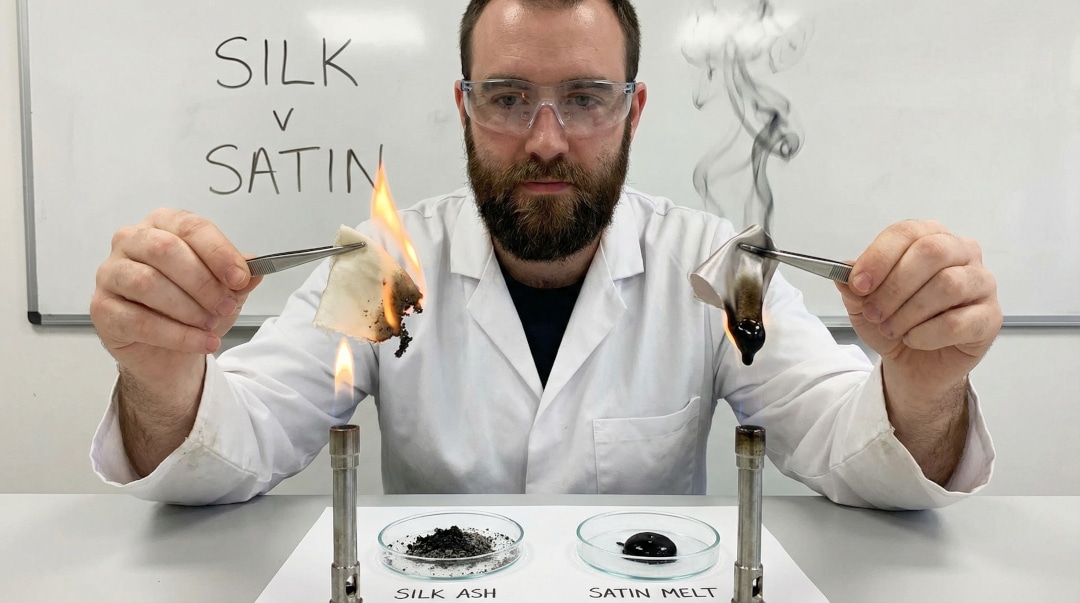
5. The Burn Test: The Most Conclusive Method
Though not recommended for finished garments, the burn test is one of the most accurate ways to determine authenticity and quality of silk.
Genuine silk burns like:
- Burning hair or feathers
- With a small, flickering flame
- Producing crisp, crumbly ash
- Self-extinguishing when the flame is removed
This happens because silk is a protein fibre, similar to human hair.
Fake silk burns like:
- Burning plastic
- Producing black smoke
- Melting or forming sticky beads
- Giving off a strong chemical odour
Polyester and nylon are petroleum-based, so the difference is obvious when burned.

Why It Matters: The Real Benefits Only Pure Silk Provides
Many consumers mistakenly assume that satin offers the same benefits as silk, especially for beauty and sleep products. This is not true.
Only pure mulberry silk offers:
- Reduced hair breakage
- Anti-frizz, moisture-preserving properties
- Natural temperature regulation
- Hypoallergenic comfort
- Gentle, anti-crease benefits for skin
- Breathability that synthetics lack
Satin may feel smooth, but it does not deliver these natural advantages because it lacks silk’s unique protein structure.
After Identifying Real Silk: How to Care for It
Once you’ve confirmed that your silk is genuine, proper care is essential to preserve its beauty and benefits.
- Hand wash with mild detergents free of enzymes
- Avoid direct sunlight when drying
- Never wring or twist silk
- Store in breathable bags
- Iron on low heat or steam gently
Silk is strong but delicate, caring for it correctly ensures it lasts for years.
Mulberry silk now accounts for more than 95% of the silk produced globally.